



Hurricane Resistant Landscaping Cape Coral Guide: Protect Your Property in SWFL
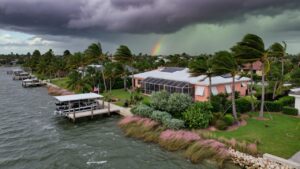
Living in Cape Coral means embracing beautiful waterfront living while preparing for the powerful storms that sweep through Southwest Florida each year. Hurricane resistant landscaping Cape Coral homeowners implement can dramatically reduce property damage, lower insurance premiums, and create a more resilient outdoor space that withstands high winds, heavy rain, and flying debris.
At MyTriCountyLandscape.com, we specialize in Cape Coral landscaping services designed specifically for our unique subtropical climate and hurricane risks. This guide reveals exactly how to transform your yard using wind-rated Florida friendly plants, intelligent hardscape strategies, upgraded irrigation systems, and cutting-edge technology.
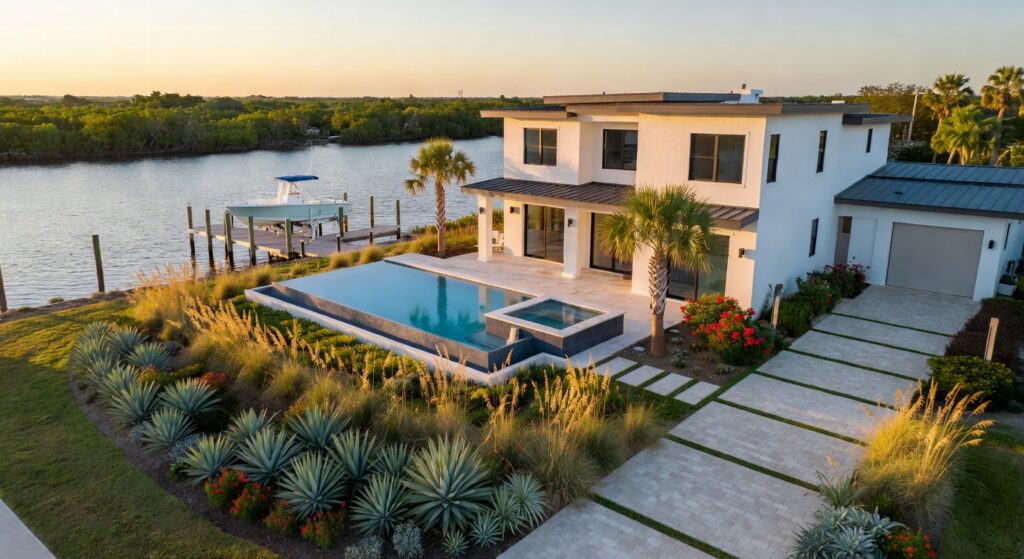
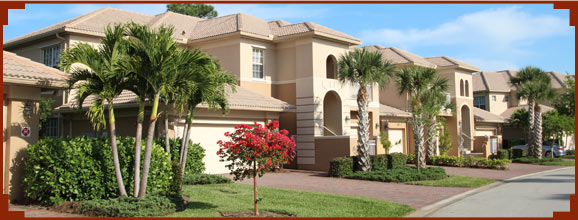
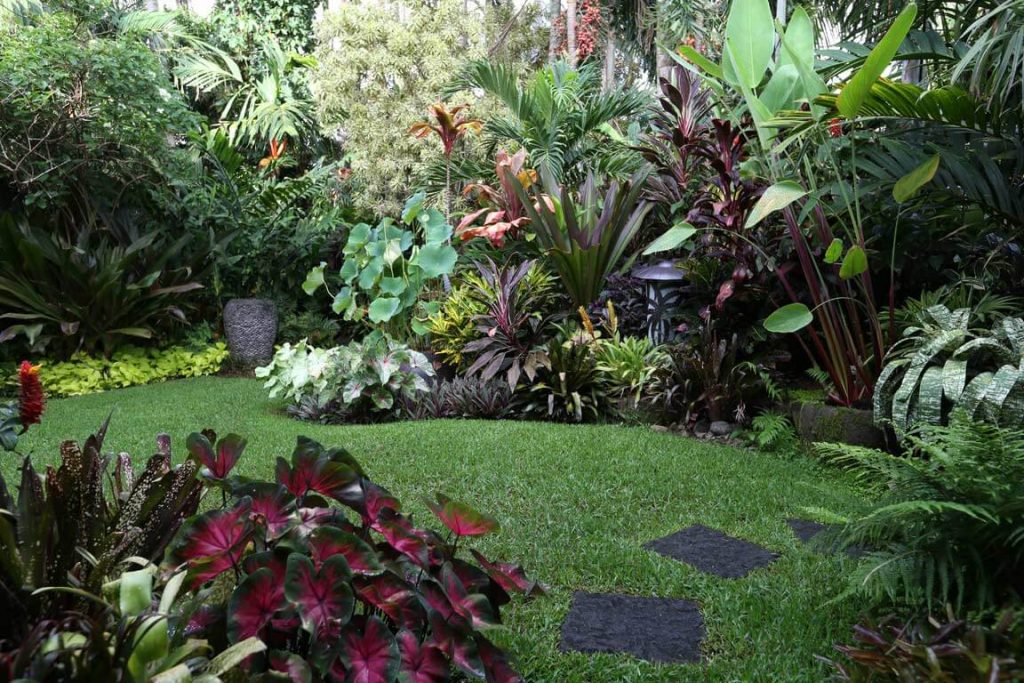
Image Grid 1

Why Hurricane Resistant Landscaping Matters in Cape Coral
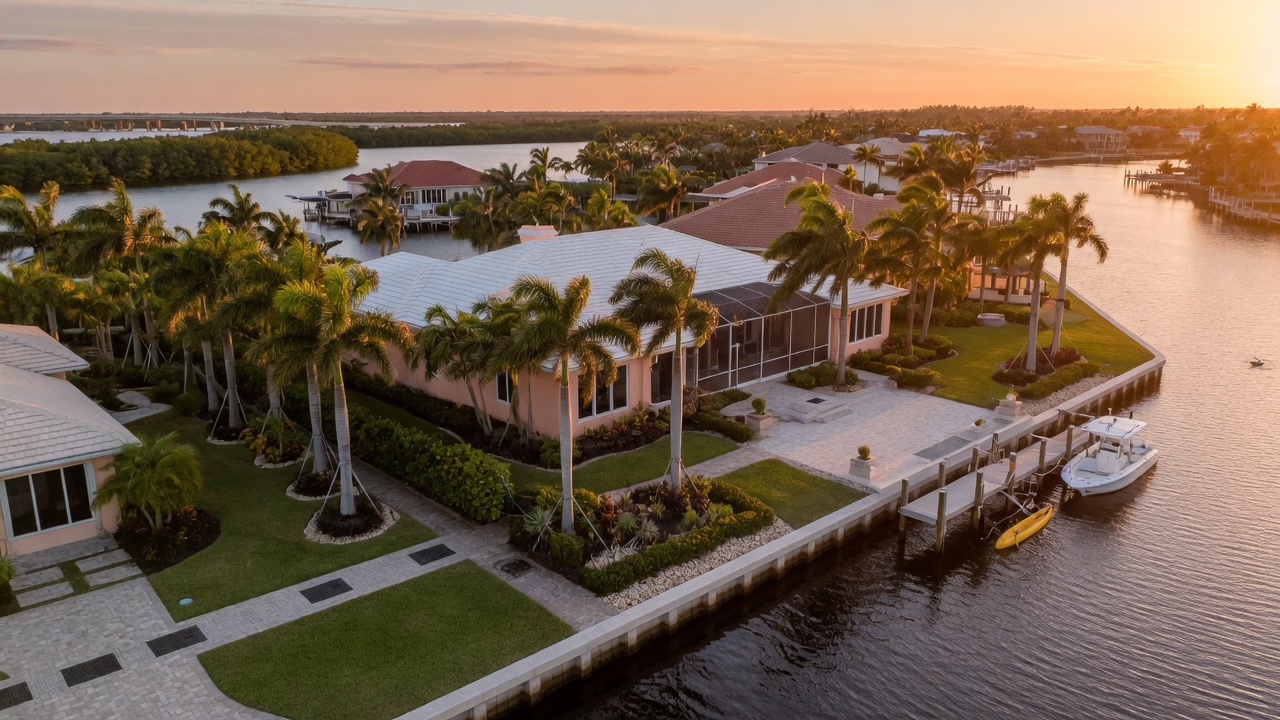
Cape Coral sits in the heart of hurricane alley. With an average of three named storms entering the Gulf of Mexico each season, properties with vulnerable landscaping face significant risk. Strategic storm resistant landscape design not only protects your home but can also qualify you for insurance discounts through the My Safe Florida Home program and private carriers.
Well-designed hurricane resistant landscaping reduces wind loads on structures, deflects debris, minimizes flooding, and maintains beauty even after major weather events.
Choosing Florida Friendly Plants That Withstand High Winds
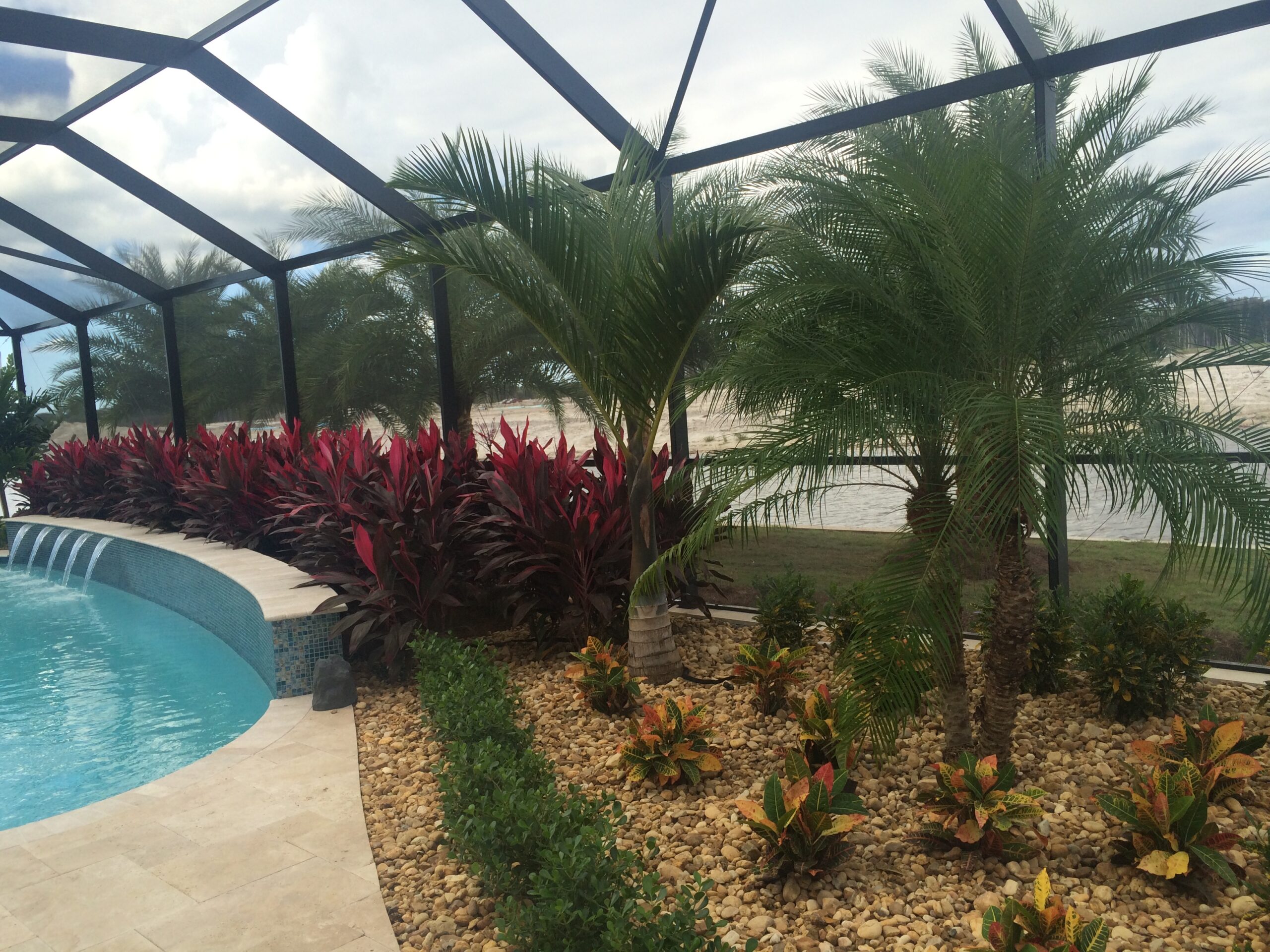
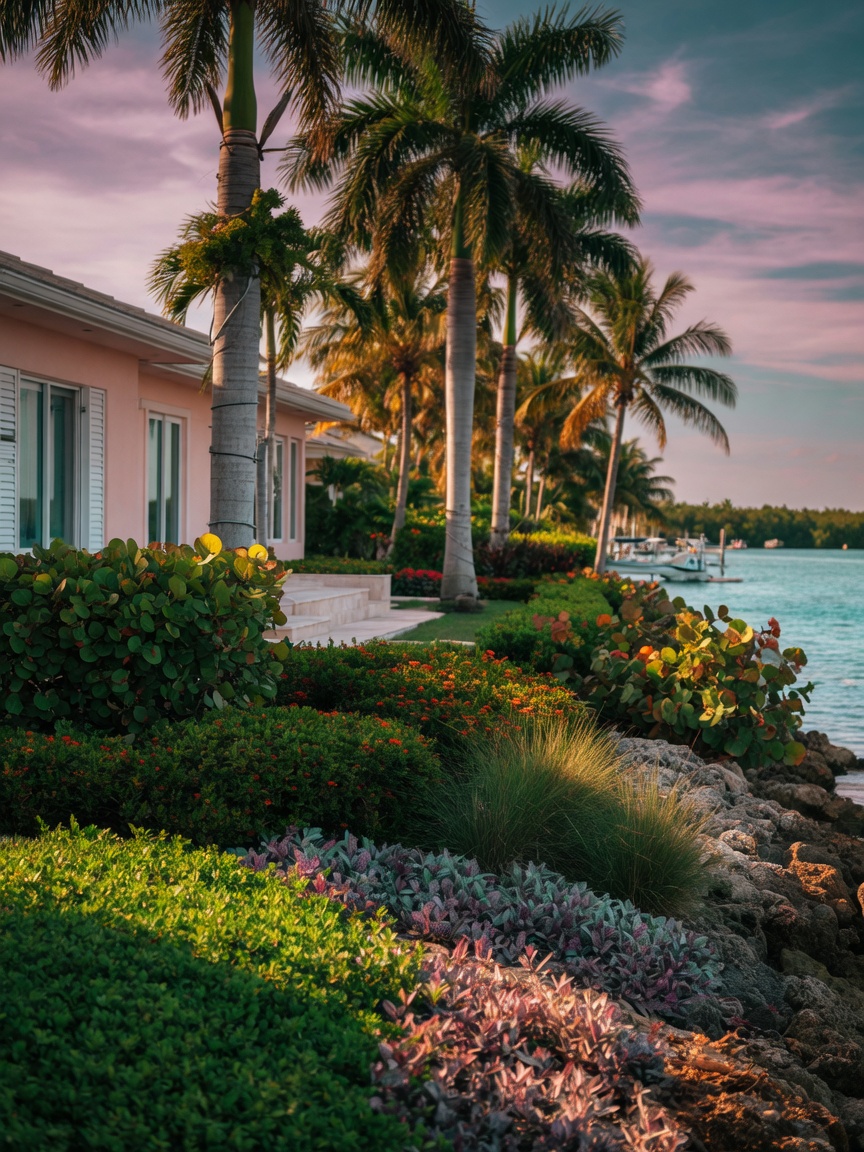
The foundation of any successful hurricane resistant landscaping Cape Coral project begins with plant selection. Florida friendly plants are naturally adapted to our soil, rainfall patterns, and wind conditions.
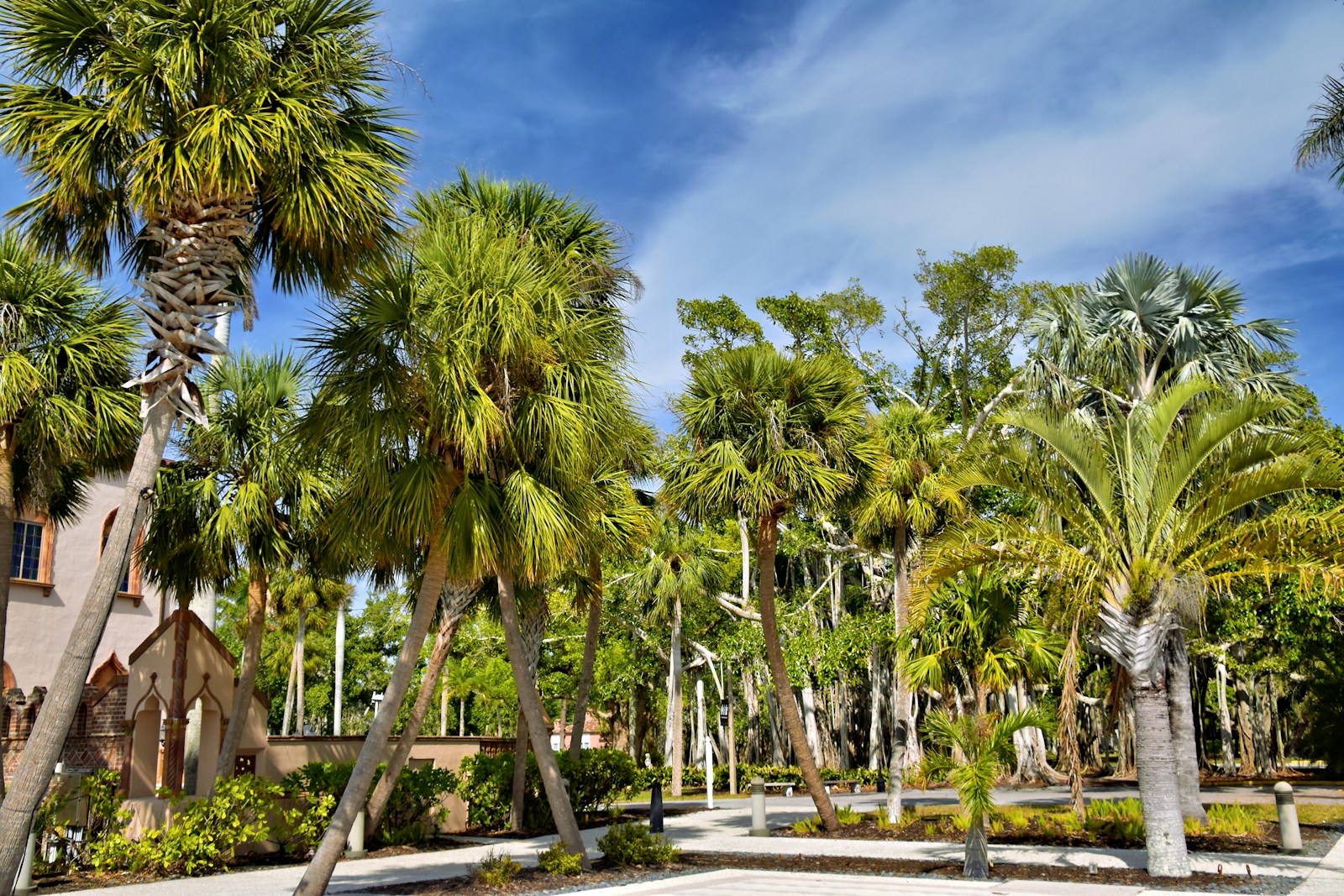
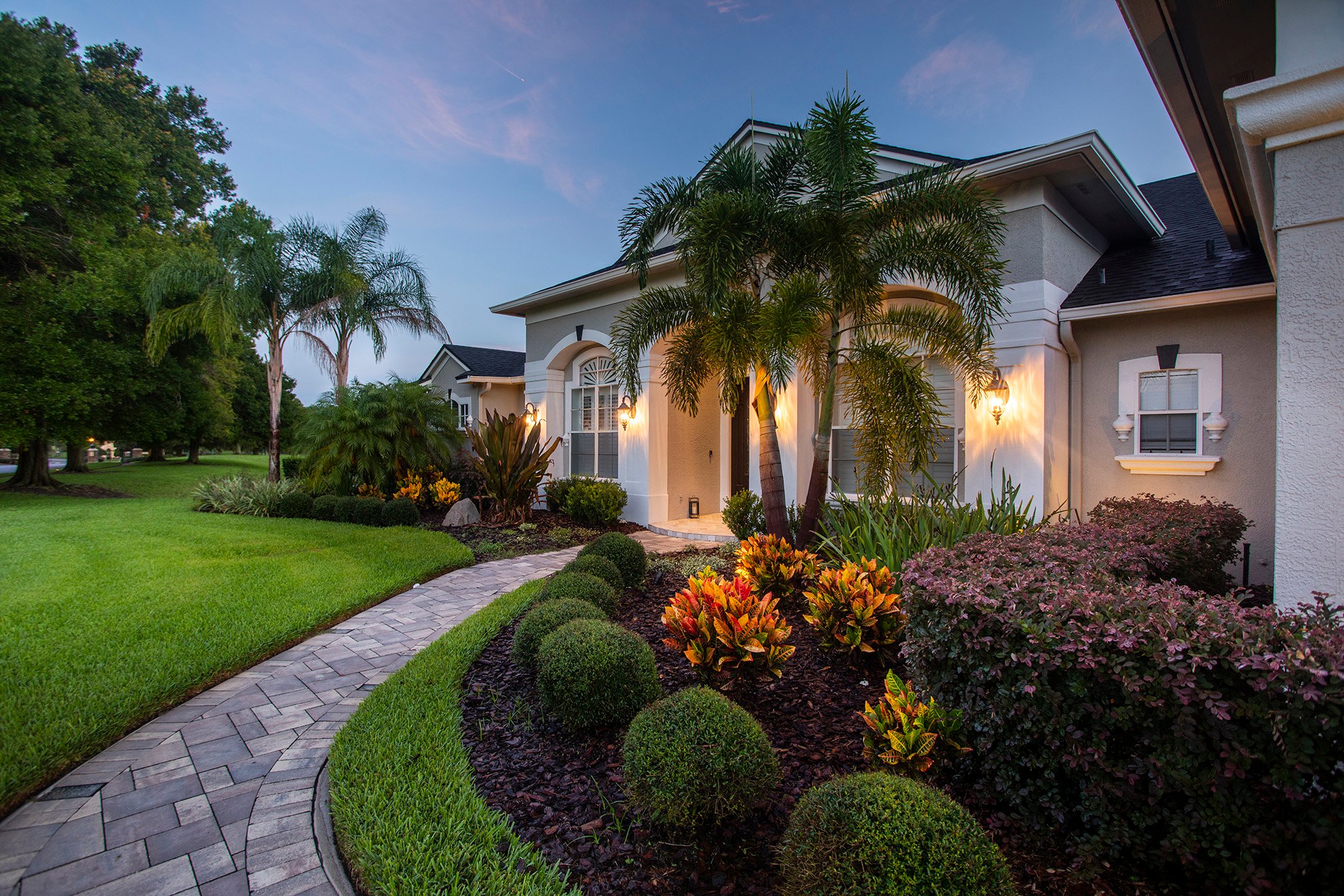
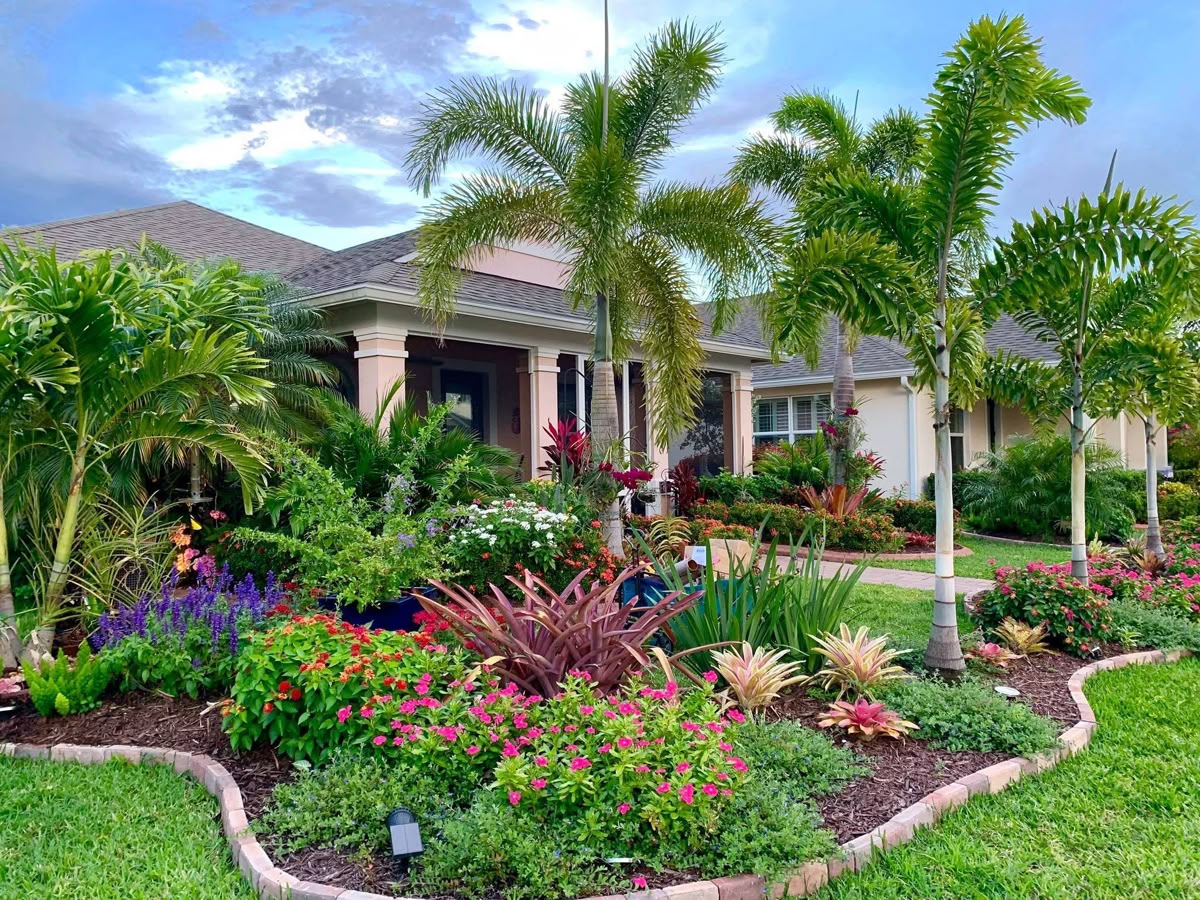
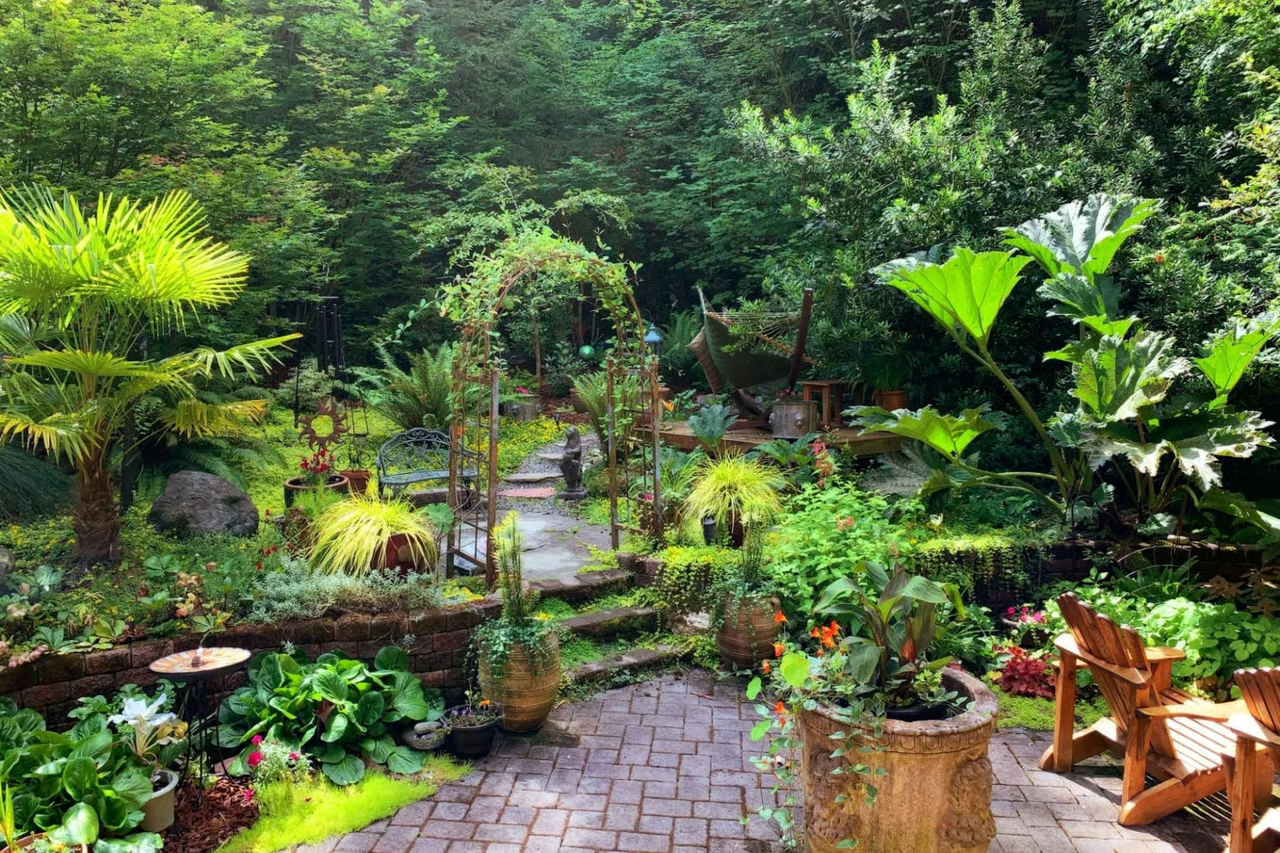
Image Grid 2


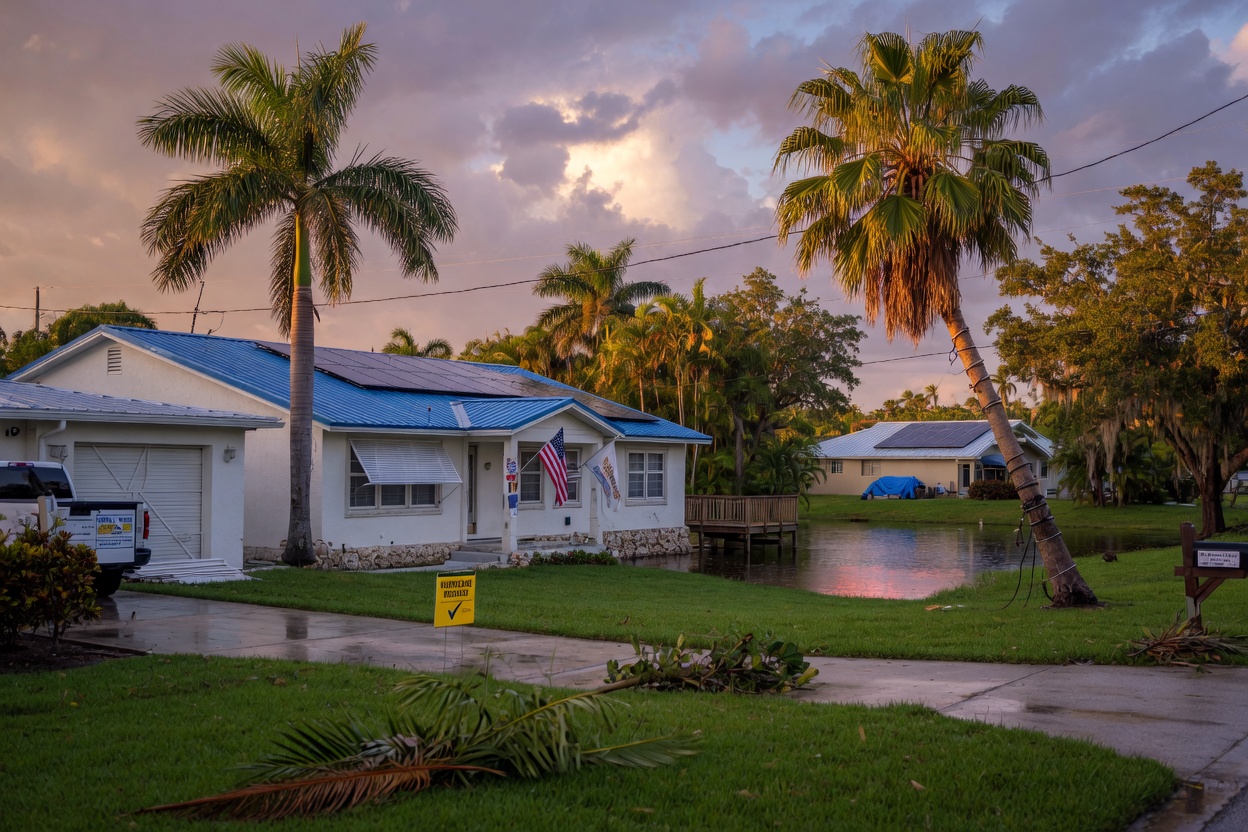

Top Wind-Rated Florida Friendly Plants for Cape Coral
- Sabal Palmetto (State Tree): Extremely wind tolerant, grows 30-40 ft, provides excellent vertical screening.
- Simpson Stopper: Dense evergreen shrub or small tree with exceptional wind resistance and beautiful white blooms.
- Coontie: Low-growing native cycad that survives Category 4 winds with minimal damage.
- Firebush: Fast-growing, attracts pollinators, and bends rather than breaks in high winds.
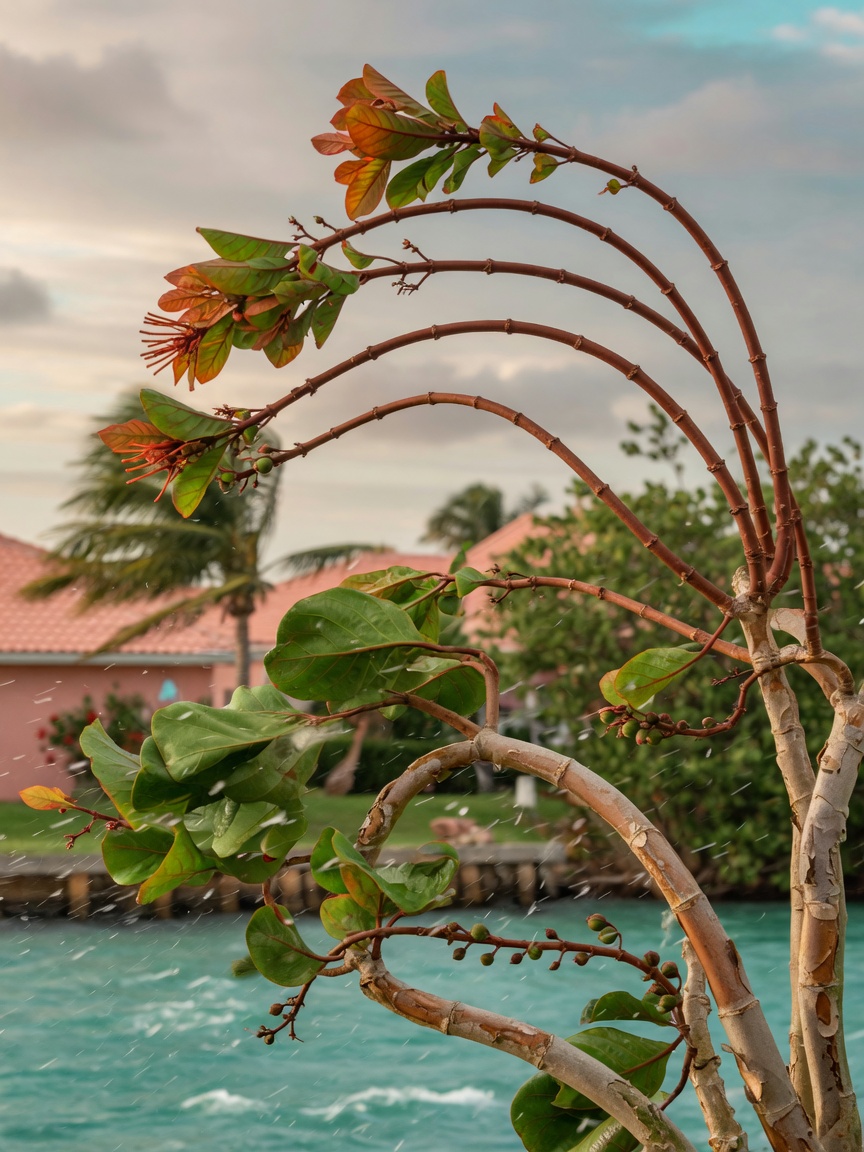
- Seagrape: Salt and wind tolerant with large leaves that create natural windbreaks.
- Beach Sunflower: Groundcover that stabilizes soil and prevents erosion during heavy rains.
- Yaupon Holly: Tough native holly that maintains structure even after major storms.
These selections outperform non-native ornamentals that often snap or uproot during tropical storms.
Storm Resistant Landscape Design Principles
Effective layout is just as important as plant choice. Strategic placement creates wind corridors that direct airflow around structures rather than against them.
Key Layout Principles for Hurricane Resistance
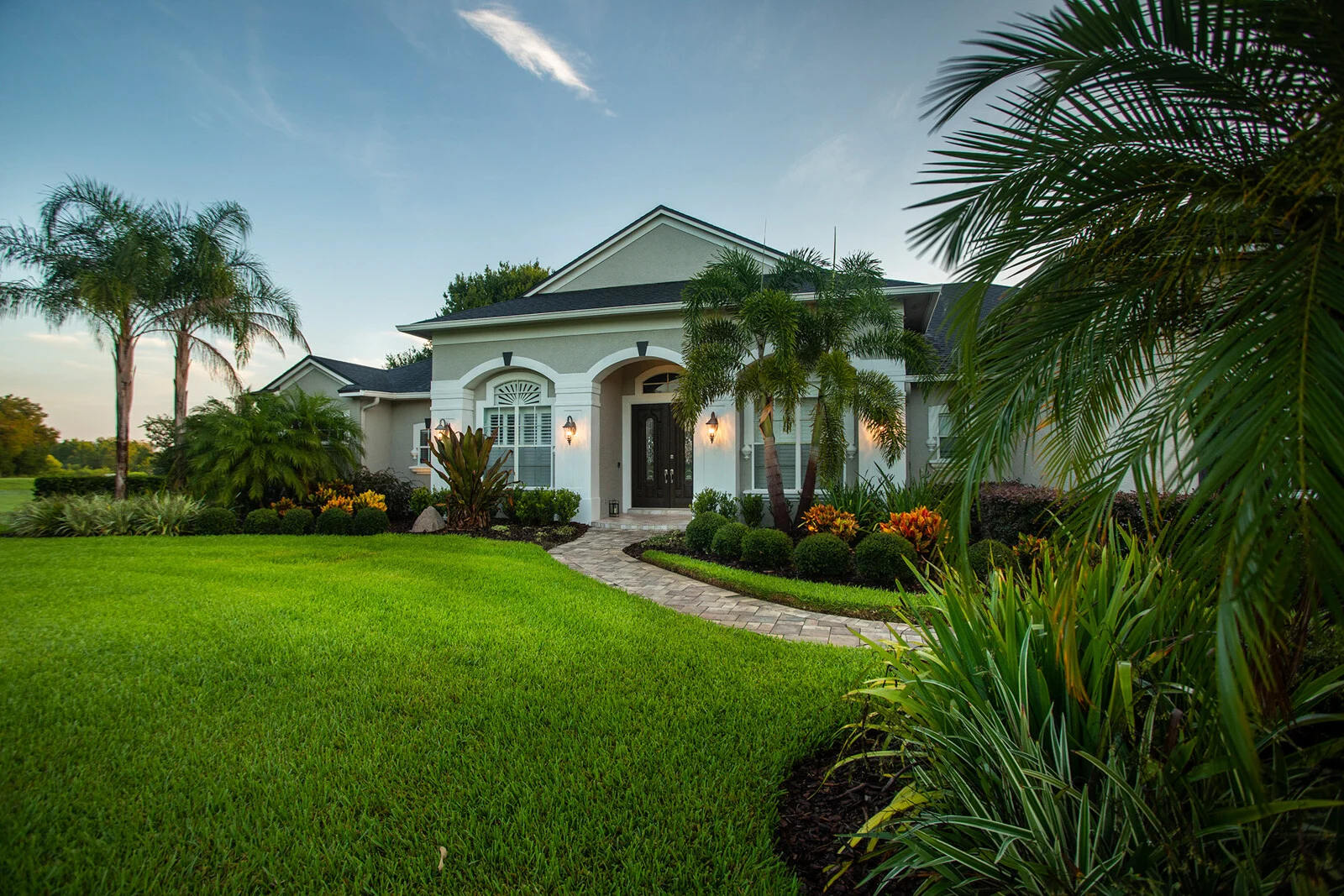
- Create layered planting zones: tall trees furthest from the house, mid-layer shrubs, and low groundcovers closest to the foundation.
- Avoid planting large trees within 30 feet of your home unless they are exceptionally wind-resistant species.
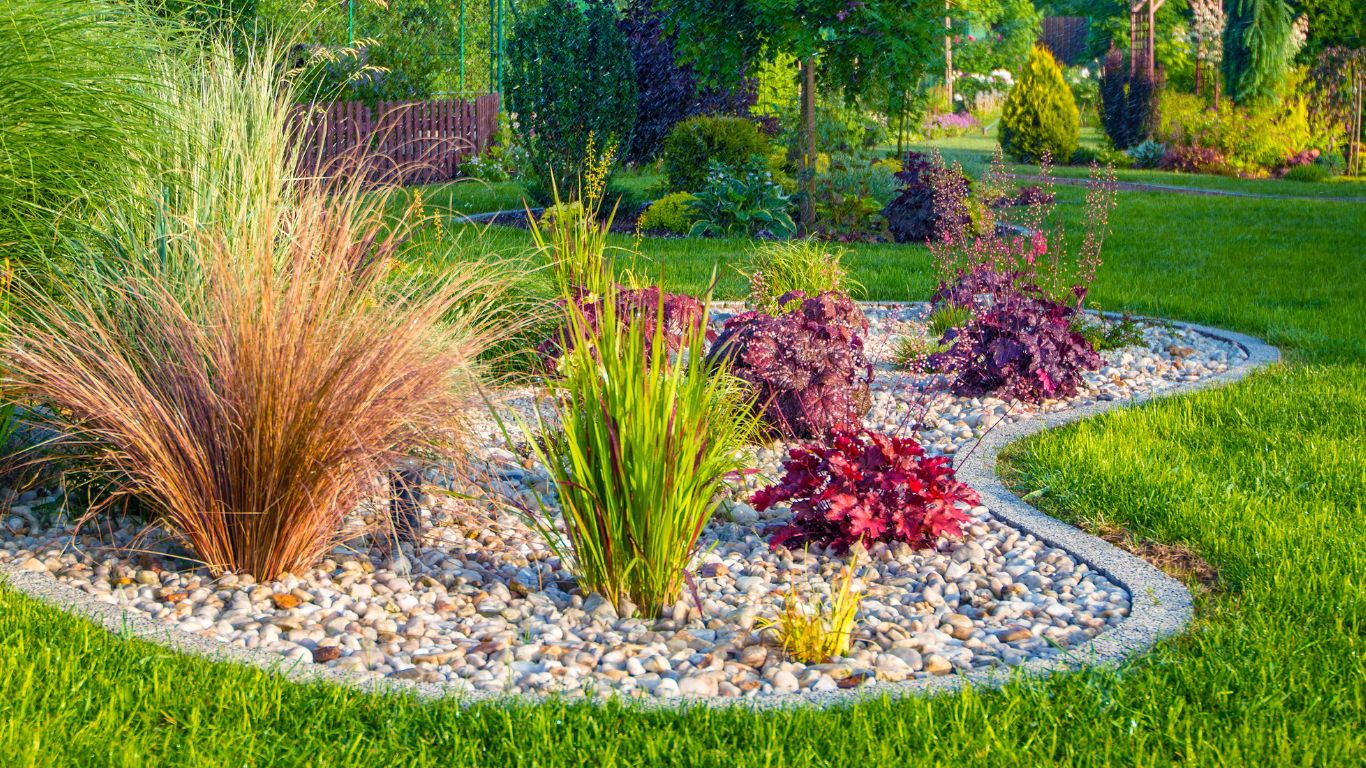
- Use curved bed lines instead of straight rows to break wind patterns.
- Incorporate berms and swales to manage stormwater runoff without creating standing water.
- Group plants with similar wind and water needs together for easier maintenance.
Hardscape Strategies That Deflect Debris
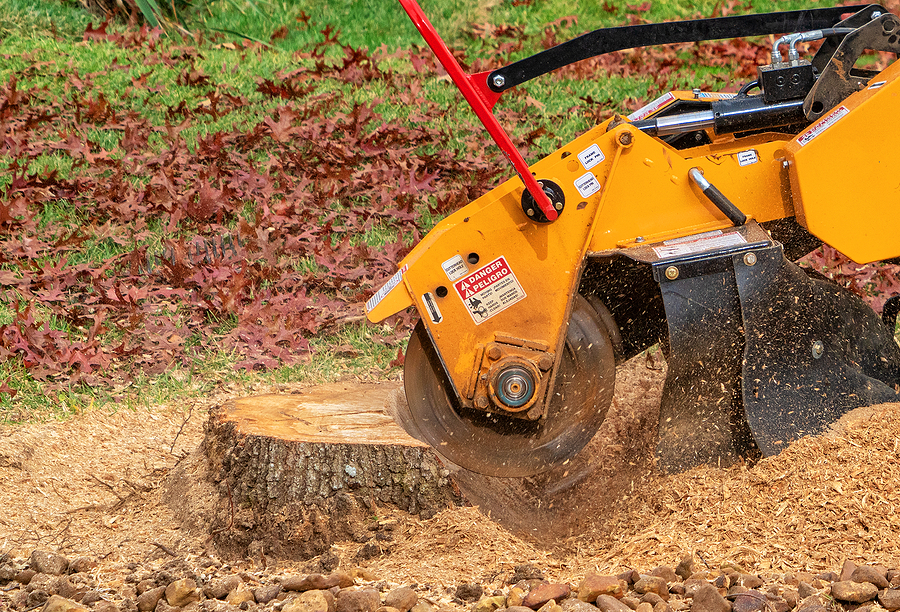
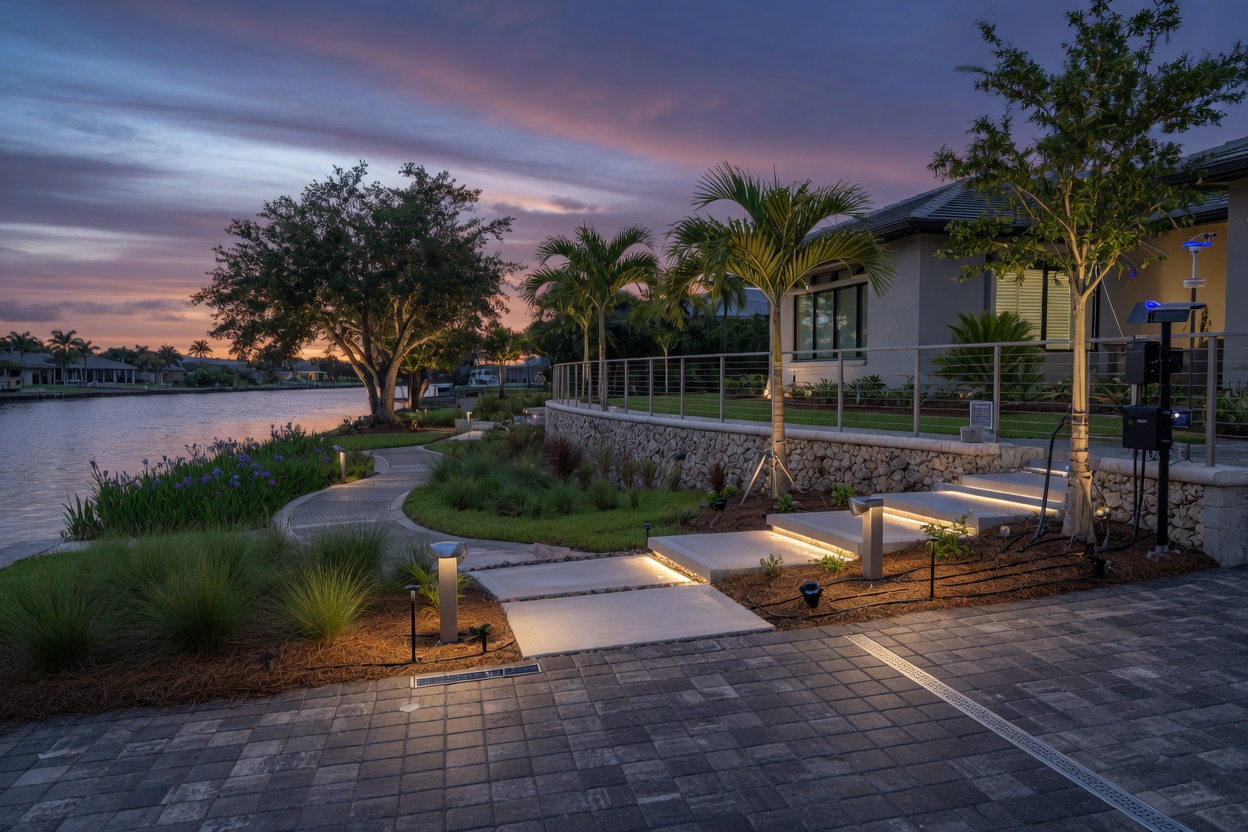
Hardscaping plays a critical role in hurricane resistant landscaping Cape Coral. Well-designed features can actually deflect flying debris and protect vulnerable areas of your property.
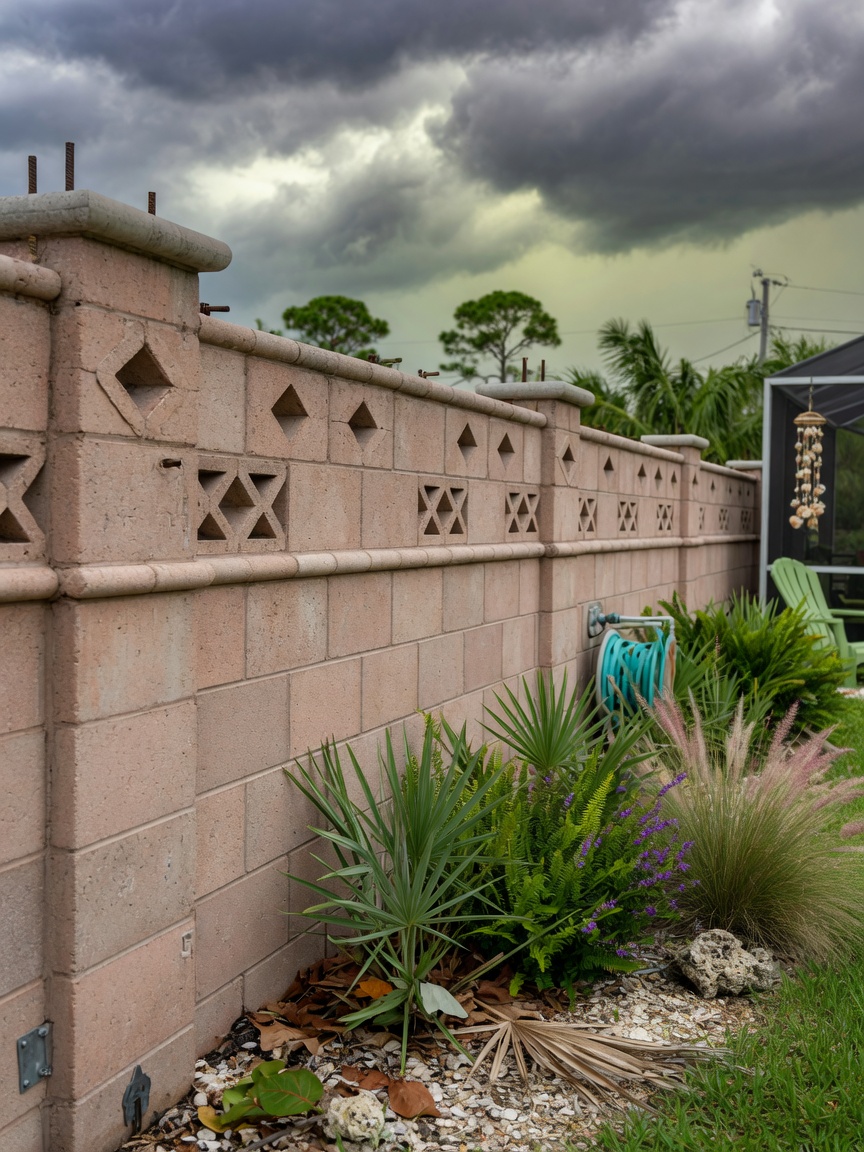
- Impact-rated decorative block walls: Positioned to create wind shadows that protect softer plantings.
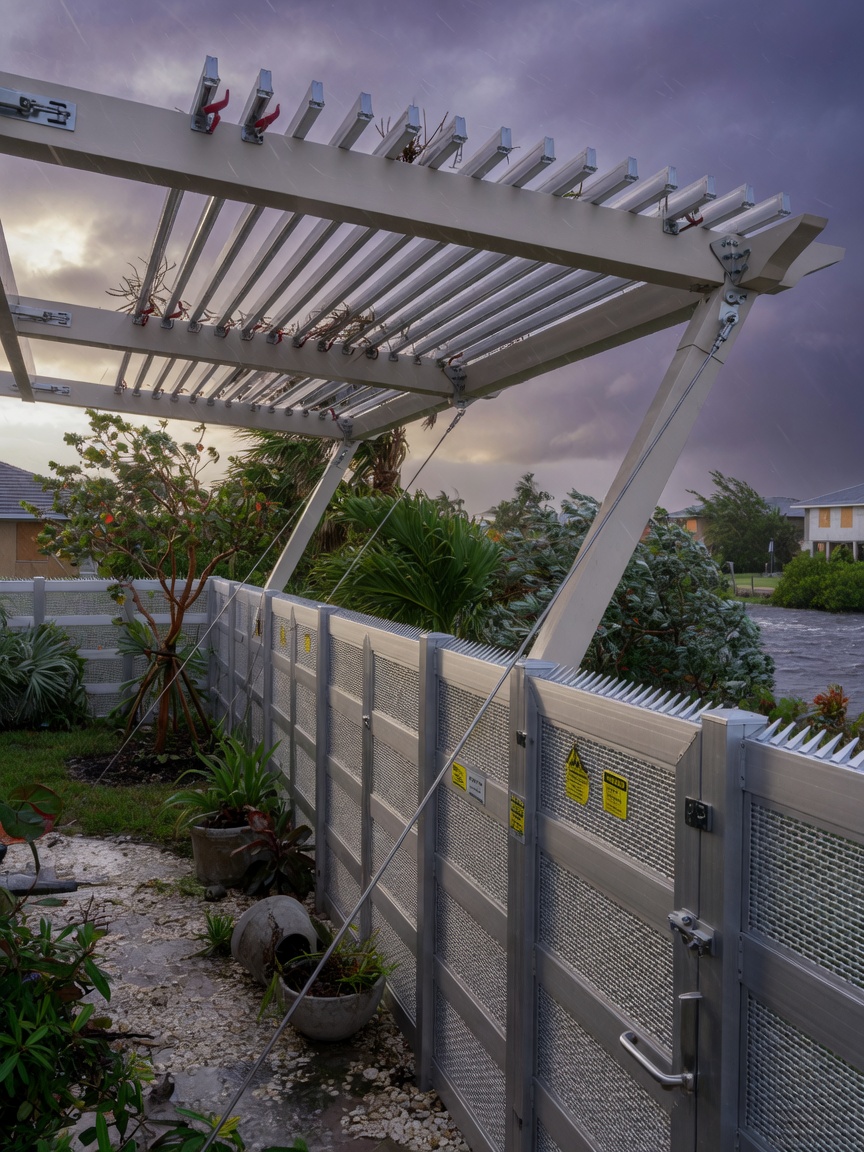
- Reinforced pergolas and arbors: Built with hurricane ties and rated for 150+ mph winds.
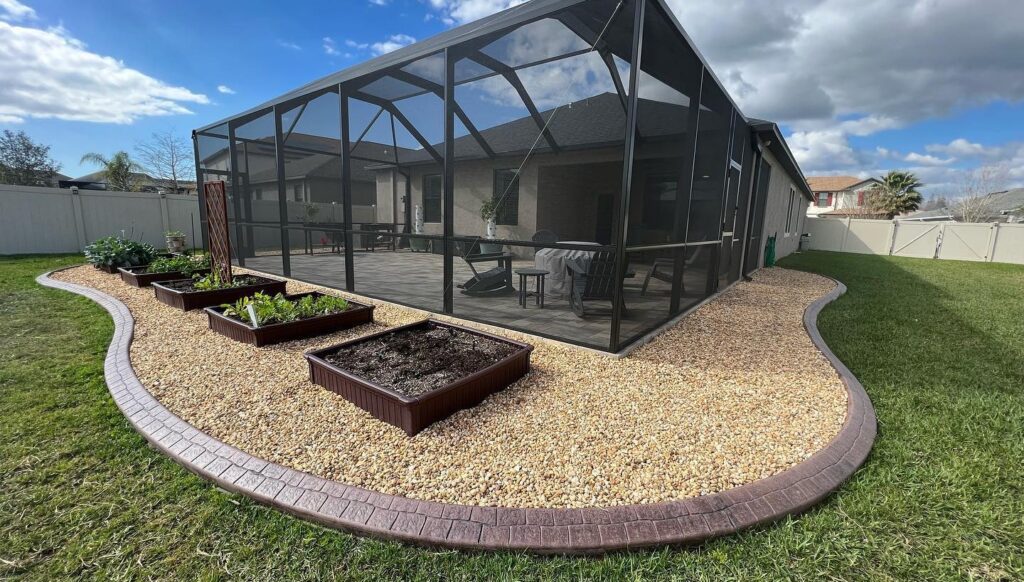
- Gravel and shell pathways: Prevent soil erosion and reduce projectile debris compared to mulch.
- Reinforced raised planters: Use concrete or reinforced composite materials that won’t become airborne.
- Strategic fencing: Impact-rated aluminum or vinyl fencing with reinforced posts that allow some wind passage rather than creating solid barriers that can fail.
These elements create beautiful outdoor living spaces while serving as functional barriers during storms.
Irrigation Upgrades That Survive Power Loss
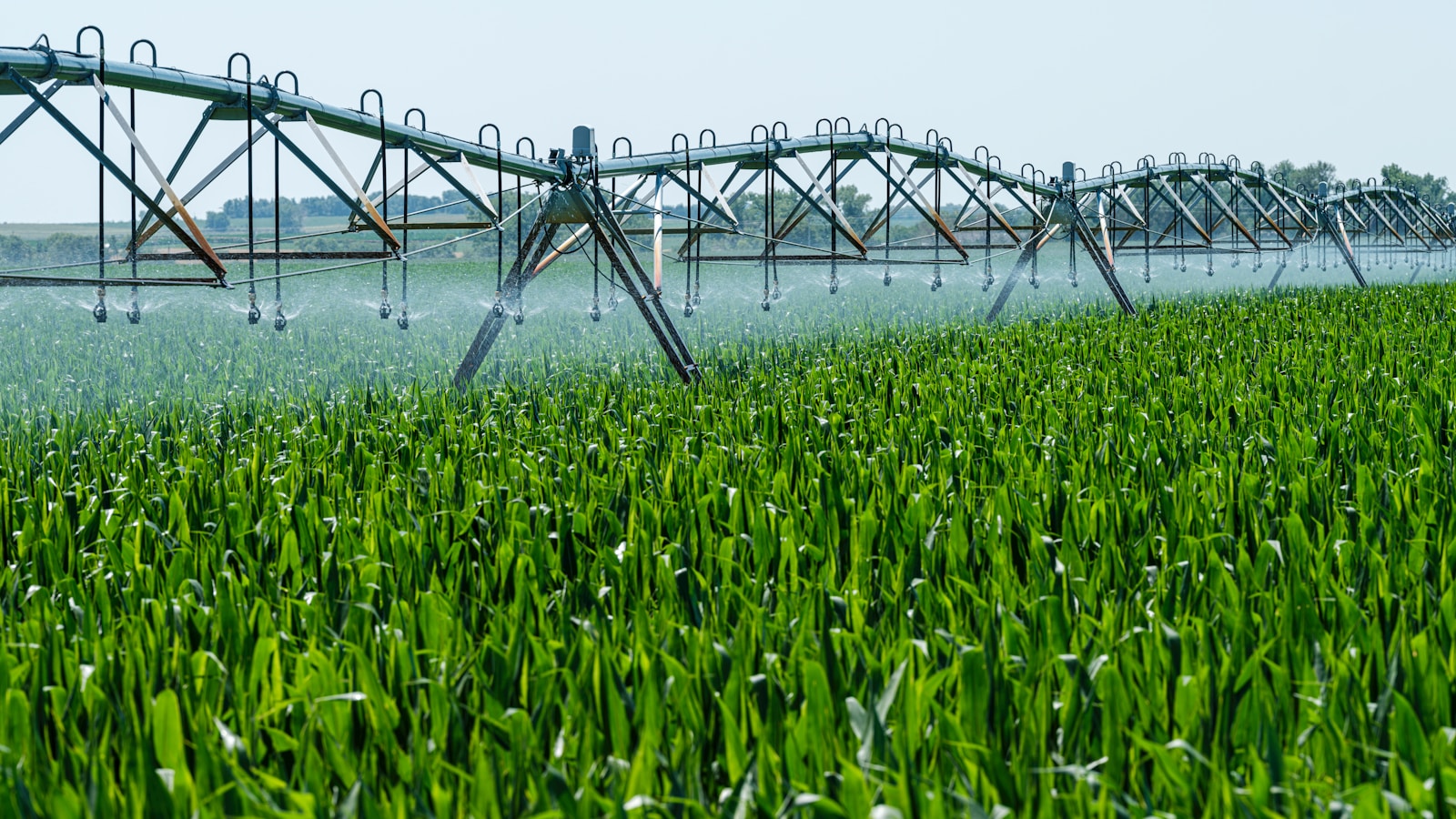
Traditional irrigation systems often fail during hurricanes when power is lost for days or weeks. Modern upgrades ensure your landscape survives both the storm and the recovery period that follows.
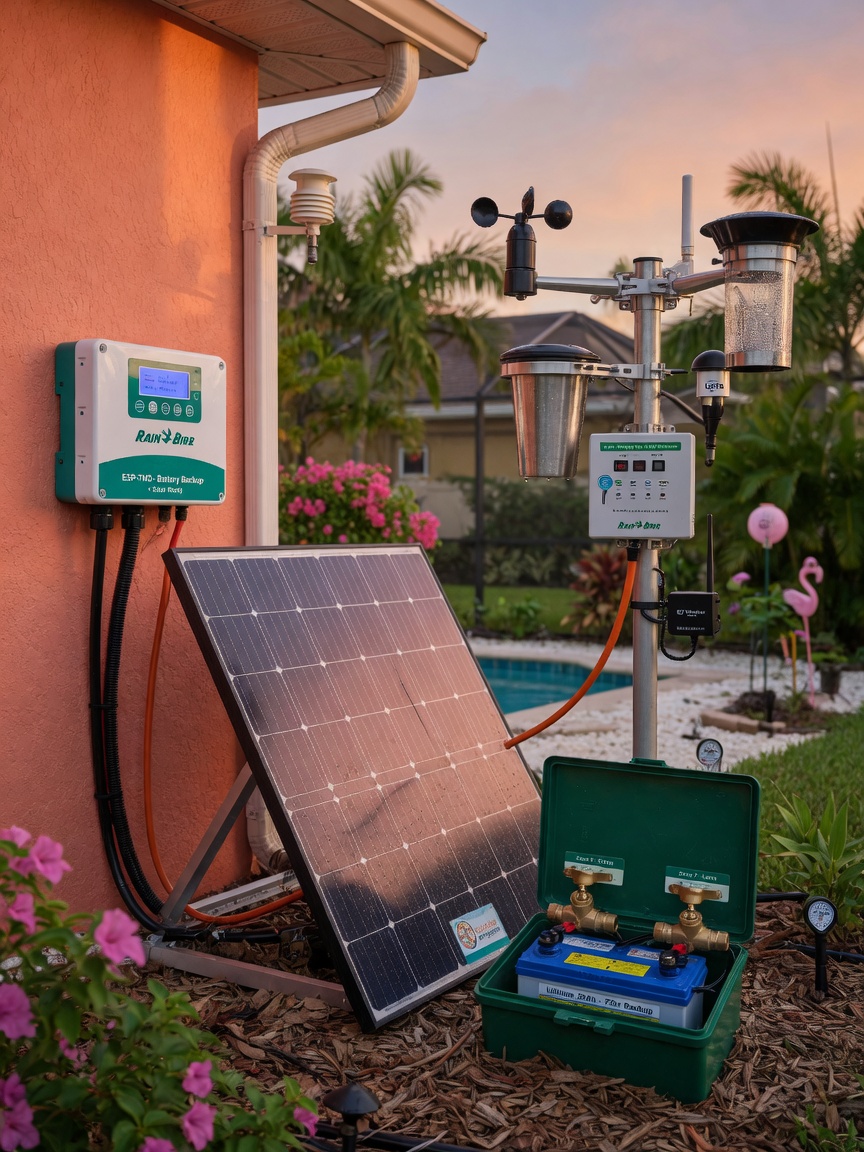
- Install battery backup controllers or solar-powered systems.
- Use high-efficiency rotors and spray heads with check valves to prevent drainage after power loss.
- Incorporate rain sensors and soil moisture sensors that function independently of WiFi.
- Consider a separate well system for irrigation that doesn’t rely on municipal power.
AI-Enabled Controllers: The Future of Storm-Ready Irrigation
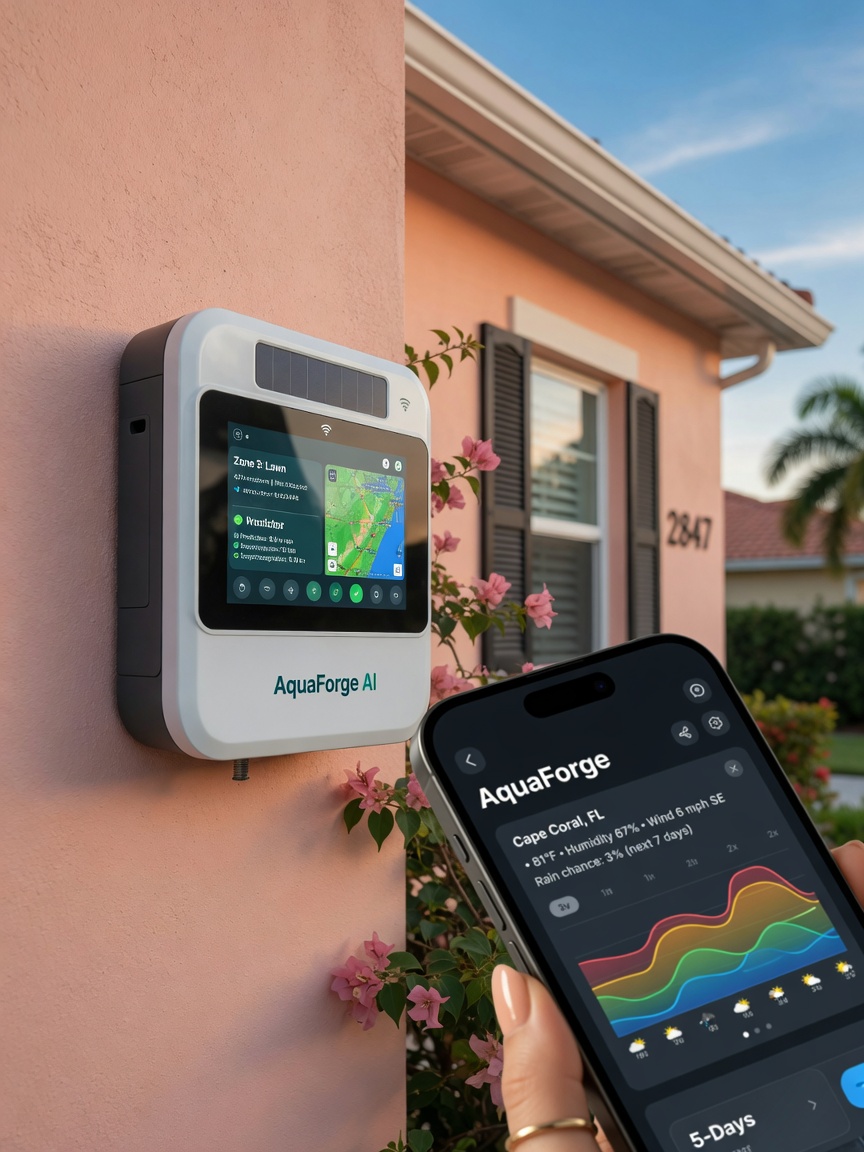
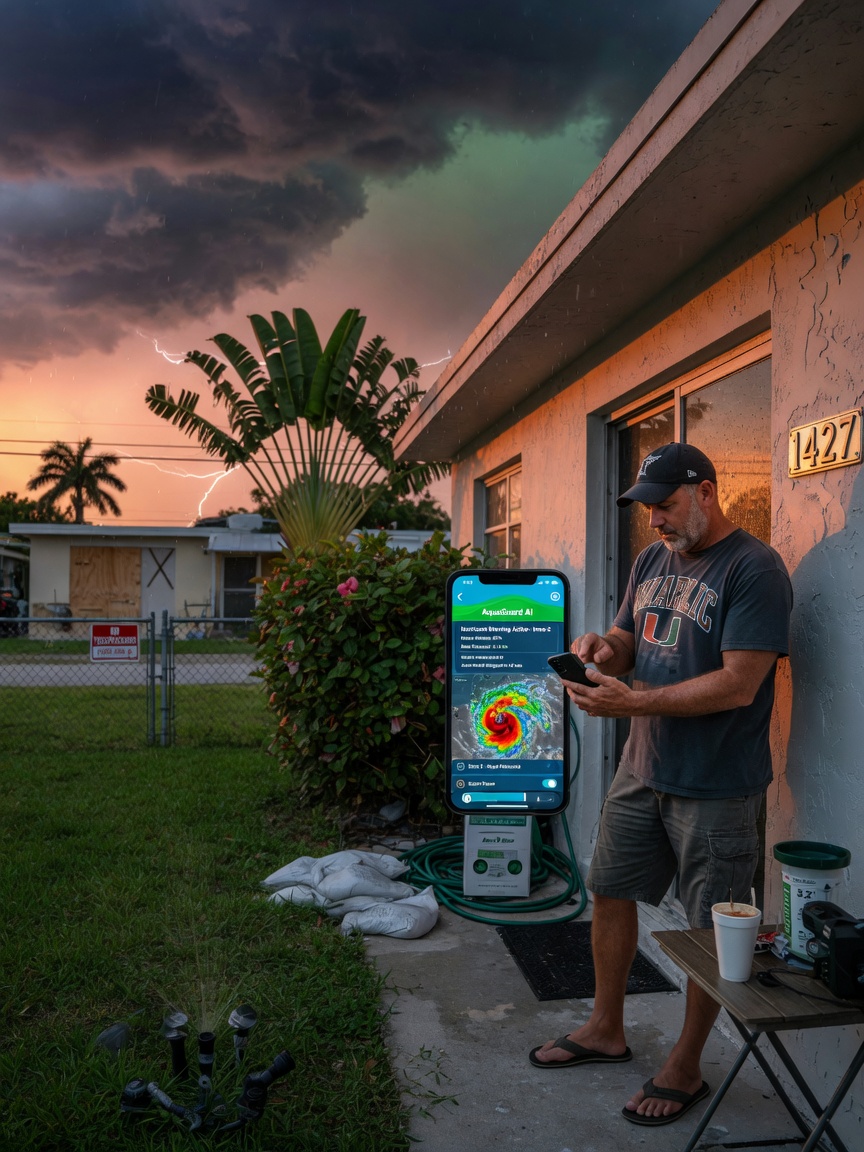
One of the most exciting developments in storm resistant landscape design is the integration of artificial intelligence. AI-enabled controllers represent a significant leap forward for Cape Coral homeowners.
These smart systems connect to local weather stations and NOAA data, automatically adjusting watering schedules based on real-time conditions. Before an approaching hurricane, they can shut down zones likely to flood, increase watering in drought-stressed areas, and send alerts to your phone about potential system vulnerabilities.
Popular models like the Rachio 3, Hunter Hydrawise, and Orbit B-hyve Pro integrate seamlessly with existing systems and typically pay for themselves within two years through water savings alone. Many qualify for rebates through the South Florida Water Management District.
Before and After Case Studies: Real Cape Coral Transformations
Case Study 1: Waterfront Home on Tarpon Court
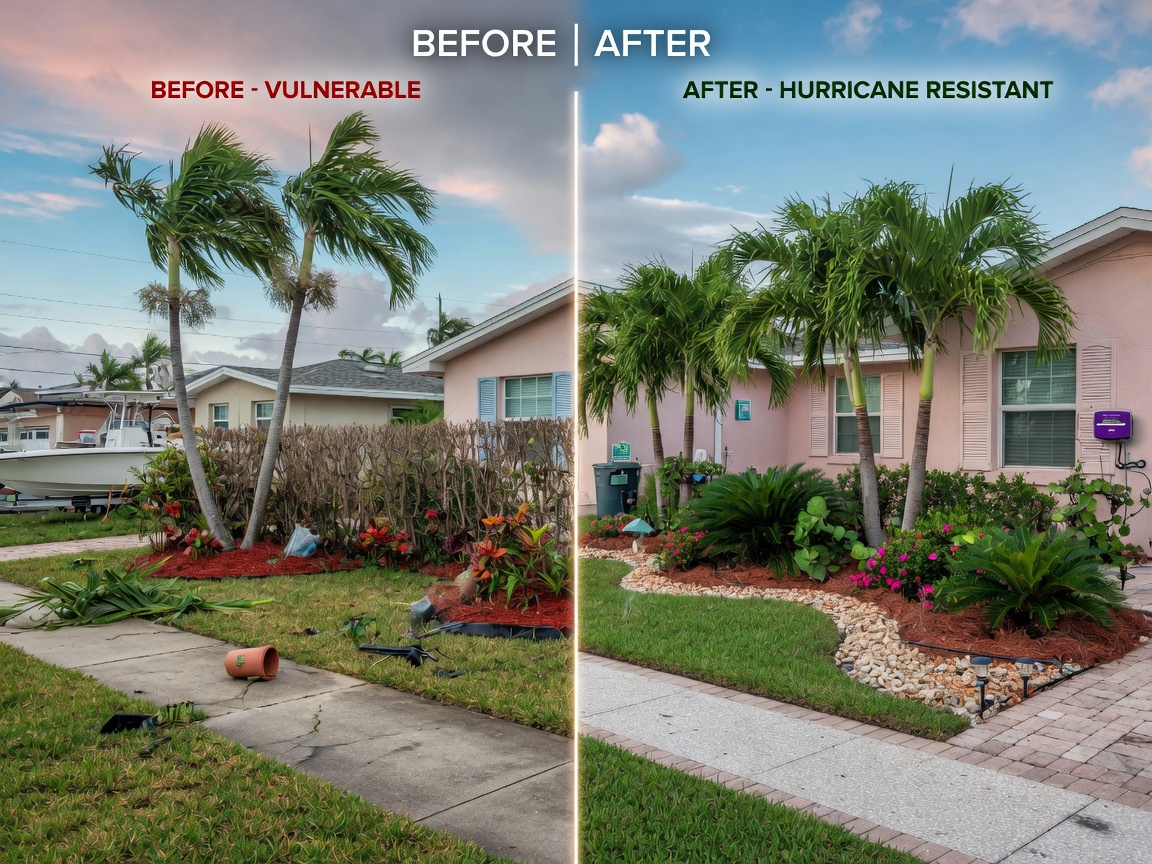
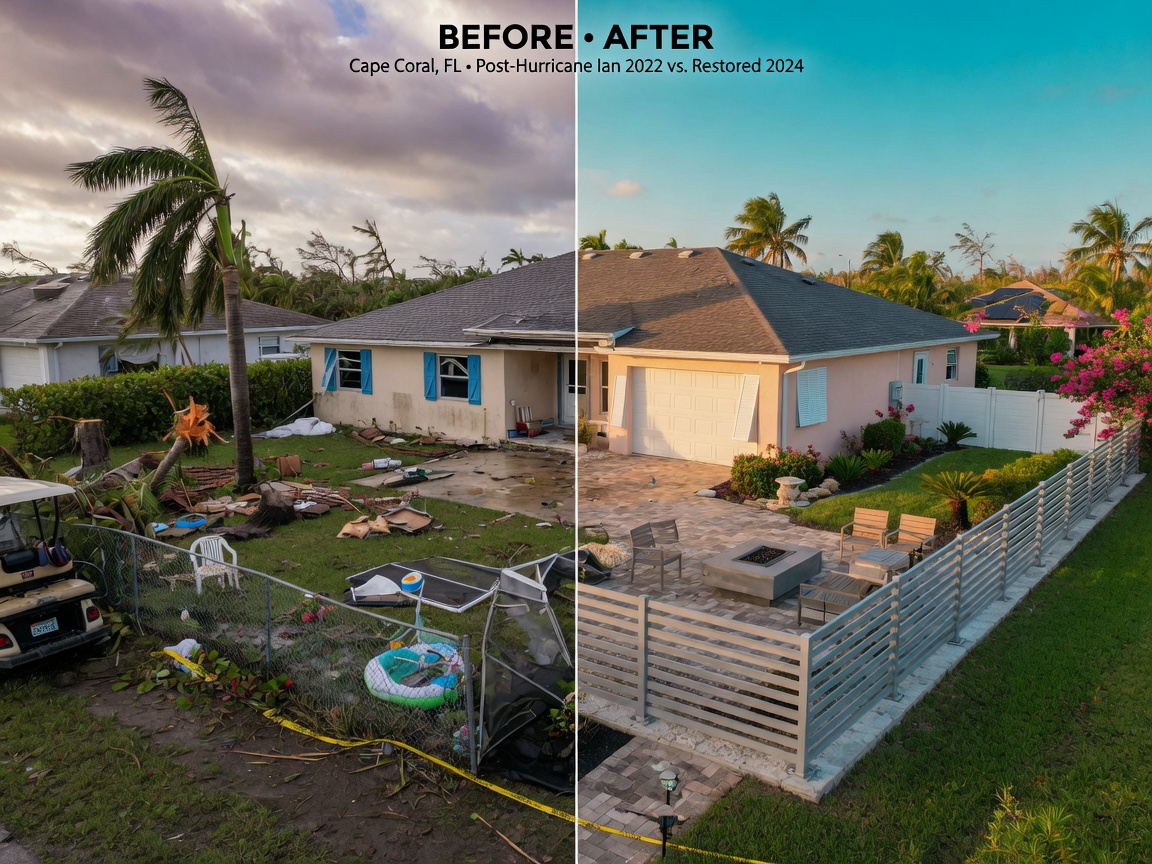
A Cape Coral waterfront property suffered repeated damage during Irma and Ian. After implementing our hurricane resistant landscaping plan, the property showed zero structural plant loss during Hurricane Helene. The transformation included replacing invasive plants with 47 native and Florida friendly specimens, adding strategic berms, and installing an AI-powered irrigation controller. Insurance premiums dropped by 18%.
Case Study 2: Pine Island Road Residence
This inland property experienced significant flooding and debris damage. Our team redesigned the front yard with reinforced hardscaping, wind-rated plantings, and a smart irrigation system with battery backup. Post-storm photos showed dramatic improvement with healthy landscaping intact while neighboring properties required complete replanting.
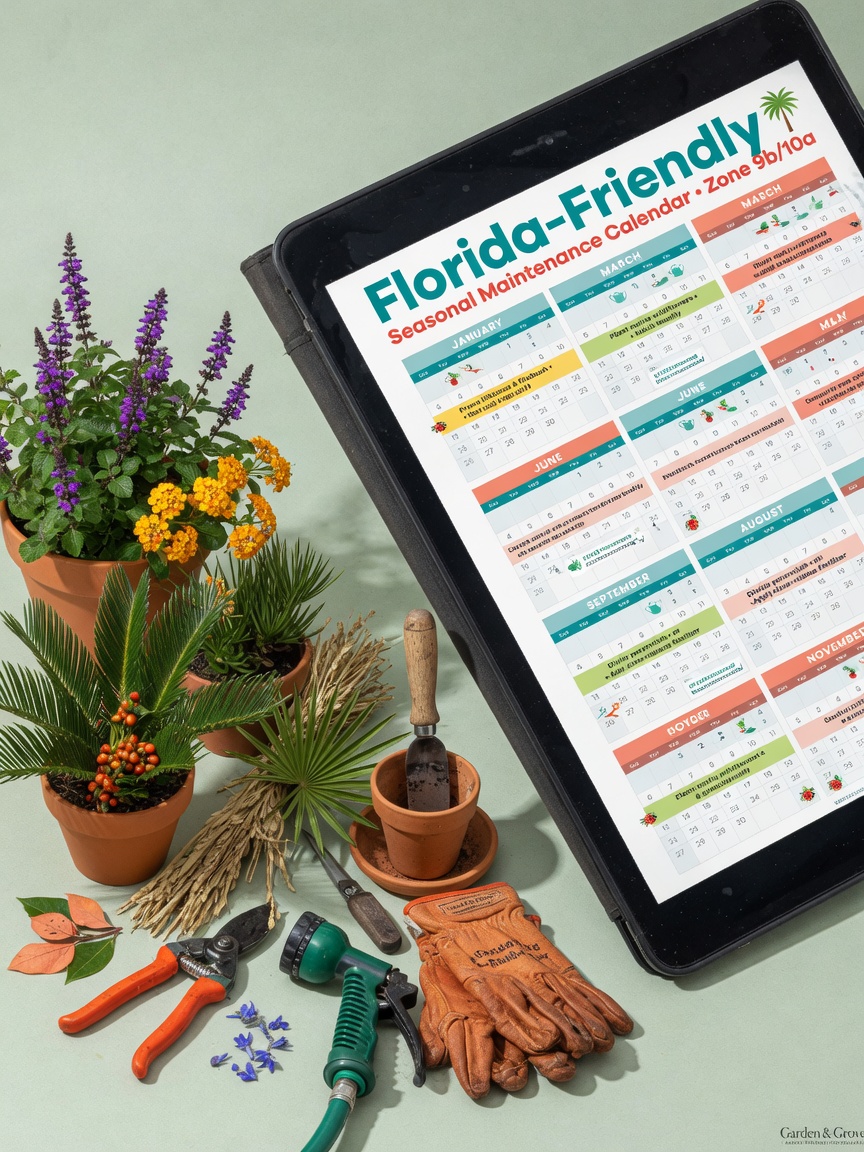
Maintenance Calendar Keyed to Storm Season
Consistent maintenance is essential for maintaining the integrity of your hurricane resistant landscaping.
January – March (Post-Storm Recovery)
- Remove any damaged branches and debris
- Apply root stimulators to stressed plants
- Inspect and repair irrigation components
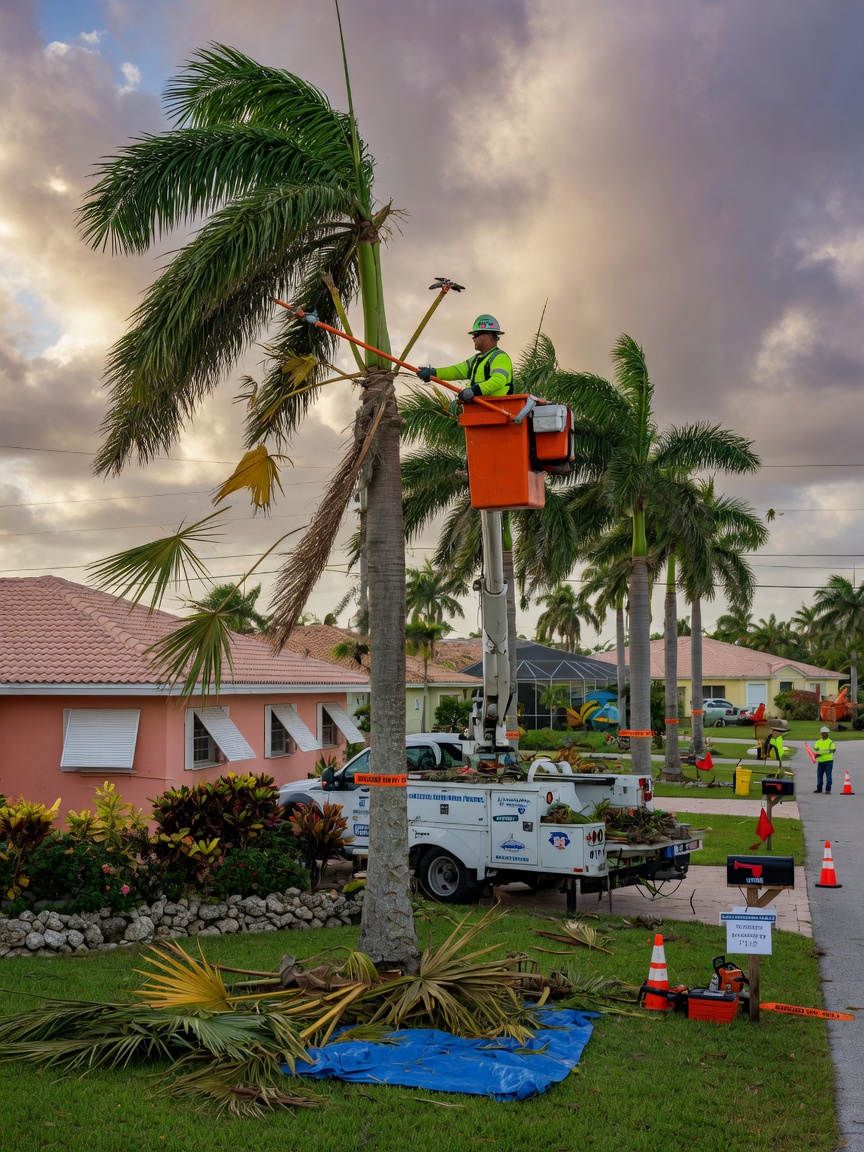
- Prune palms and trees before new growth begins
April – June (Pre-Storm Preparation)
- Trim all trees and shrubs to reduce wind resistance
- Secure loose objects and outdoor furniture
- Test AI controllers and backup batteries
- Apply preventive fungicide where needed
July – September (Peak Hurricane Season)
- Monitor weather alerts daily
- Keep plants properly hydrated but avoid overwatering before storms
- Secure all movable objects
- Review and update emergency plant protection plans
October – December (Post-Season Evaluation)
- Evaluate landscape performance after storm season
- Plan upgrades for next year
- Install new plants during optimal planting window
- Winterize irrigation systems
Approximate Upgrade Costs and Return on Investment
Many Cape Coral homeowners wonder about the investment required. Here are typical costs for hurricane resistant landscaping upgrades:
- Basic wind-rated plant conversion (2,000 sq ft): $4,500 – $7,500
- Full storm resistant landscape design including hardscaping: $12,000 – $25,000
- AI-enabled irrigation system with battery backup: $2,800 – $4,200
- Reinforced decorative walls and windbreaks: $8,000 – $15,000
Most homeowners see insurance discounts of 10-25% and significantly reduced replanting costs after storms. The average complete system pays for itself within 4-6 years.
Getting Started with Hurricane Resistant Landscaping in Cape Coral
Begin by assessing your current landscape during the off-season. Identify vulnerable trees, outdated irrigation components, and areas where debris collects. Prioritize changes that will have the greatest impact on both storm resilience and insurance risk reduction.
Our team at MyTriCountyLandscape.com offers free consultations to help homeowners create a personalized, phased approach to implementing hurricane resistant landscaping Cape Coral properties need.
Conclusion: Build a Landscape That Withstands SWFL Storms
Hurricane resistant landscaping is no longer optional for responsible Cape Coral homeowners. By combining Florida friendly plants, intelligent design principles, durable hardscaping, smart irrigation, and AI technology, you can create an outdoor space that not only survives storms but actually helps protect your home.
Start with a professional assessment, implement changes in priority order, and maintain your landscape diligently. The result is a more beautiful, more resilient property that stands strong through whatever weather Southwest Florida delivers.
Contact our Cape Coral landscaping services team today to schedule your hurricane resilience consultation and take the first step toward a storm-ready landscape.